The
Oregon is one of those places where you can stand beneath a waterfall in the morning, wander through the forest in the afternoon, and end the day barefoot on the coast.
You can exchange vows beside an alpine lake, climb into the mountains, explore the high desert, paddle a river, drink a really good beer in Bend, or disappear into a cabin while the rain hits the roof. You can build the experience around a single location or turn it into a multi-day Oregon road trip.
Oregon is also my home, and one of my favorite parts of helping couples elope here is showing them how much exists beyond the handful of places they have already seen online.
This guide will take you through some of my favorite Oregon elopement locations, from waterfalls and coastlines to mountains, rivers, lakes, and high desert. It will also help you think through what you want to experience, when to visit, how marriage licenses and permits work, and what else can become part of your time here.
Choosing where to elope in Oregon
Before choosing an exact ceremony location, think about the environment you want around you.
Do you want to hear the ocean while you exchange vows? Do you want moss, enormous trees, and enough rain to make you stop worrying about your hair? Are you imagining an alpine lake, a hard-earned mountain view, warm desert rock, or a cabin where you can spend half the morning drinking coffee?
Then think beyond the ceremony. Would you rather hike, paddle, ride horses, climb, take a boat somewhere, bring your dogs, explore a town, or spend most of the day eating incredible food?
The location should support the experience, not become something you choose only because it will look good in photographs.
Some of the places in this guide are easy to reach. Others require hiking, seasonal permits, rough-road travel, or a guide. Access, weather, wildfire conditions, tides, crowds, and land-management rules can change, so we will always check the current information before building your elopement around a particular spot.
Oregon waterfall elopement locations
Okay, okay… when you think about Oregon, you probably think about waterfalls.
That is one assumption you can keep.
The Columbia River Gorge alone holds an incredible concentration of waterfalls, and there are even more scattered through the forests of southern and central Oregon. Waterfalls are especially good if you are willing to embrace rain, mist, mud, and the possibility that your wedding clothes will not stay spotless.
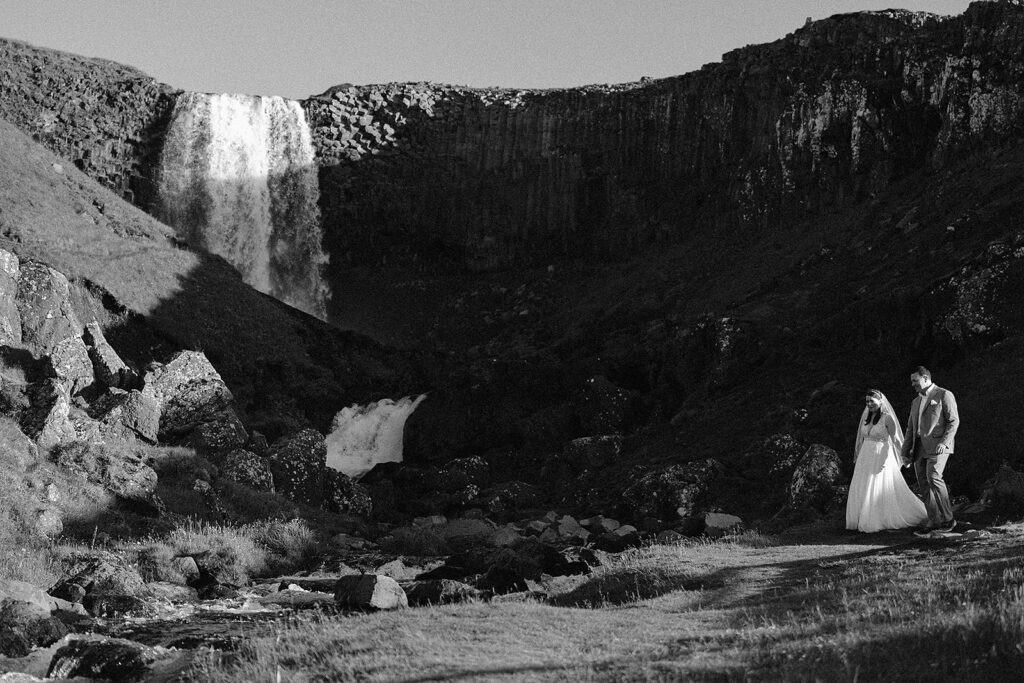
Latourell Falls
Latourell Falls is one of the easiest waterfalls in the Columbia River Gorge to experience without committing to a long hike. The tall, narrow waterfall drops beside a wall of columnar basalt covered in bright lichen, which gives the entire place so much texture.
Easy access also means it can be busy. A weekday or quieter time of day may give us more room, but this is not a place where I would promise complete privacy.
Wahclella Falls
Wahclella Falls requires more walking, but the trail follows Tanner Creek through a narrow, green canyon before reaching the waterfall. It gives you more of an experience than simply stepping out of the car for a few photographs.
This is still a popular Columbia River Gorge hike, so we will check current trail conditions, parking, seasonal hazards, and crowd patterns before choosing it for a ceremony.
Oneonta Trail
Oneonta Gorge itself remains closed to public entry. That means we cannot climb through the logjam, walk through the creek, or enter the slot canyon to reach Lower Oneonta Falls.
The surrounding Oneonta Trail has reopened, and the area still offers forest, creek, and waterfall scenery, but it needs to be planned around the trails and spaces that are legally open. This is a good example of why an older blog post or photograph should never be treated as proof that a location is currently accessible.
Abiqua Falls
Abiqua Falls drops into an enormous basalt amphitheater that feels completely different from the waterfalls in the Gorge. Reaching it can involve a rough access road, limited parking, and a steep trail with rope-assisted sections.
The waterfall is on privately owned land where public access has historically been allowed, but access can change. We will verify permission and current road and trail conditions before including it in an elopement. This is best for couples who are comfortable with rugged terrain and are prepared for the possibility that we may need another plan.
Toketee Falls
Toketee Falls is known for its two-tiered drop and wall of columnar basalt along the North Umpqua River. The maintained trail leads to an overlook rather than the base of the waterfall.
The viewpoint can be a beautiful stop during a larger southern Oregon experience, especially when combined with other locations along the North Umpqua corridor. We will remain on the official trail and viewpoint rather than following unsafe social trails below it.
Watson Falls
Watson Falls drops approximately 293 feet through a forested basalt landscape, making it one of the tallest waterfalls in southwest Oregon. The trail is relatively short, but it climbs and can be slick, wet, and noisy near the falls.
Toketee and Watson Falls are close enough to experience during the same trip, depending on current road, trail, and wildfire conditions.
If waterfalls, forests, Portland, and a really good dinner all sound like they belong in the same experience, the Columbia River Gorge can give you that combination without spending the entire day driving.
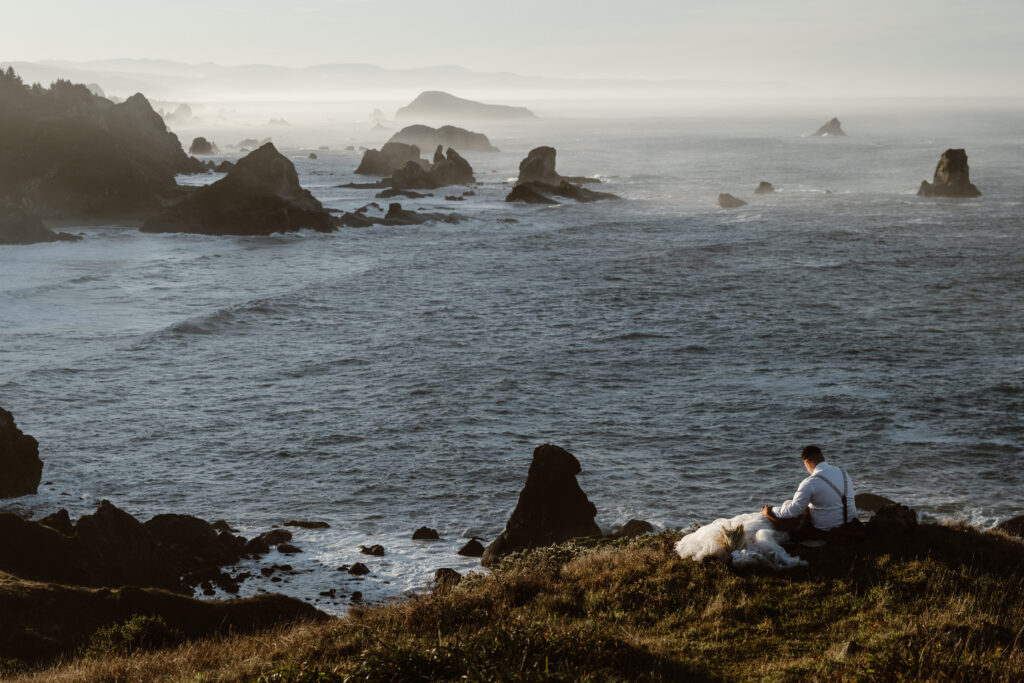
Oregon Coast & sand dune elopement locations
The Oregon Coast is wild in a way I never get tired of.
There are enormous sea stacks, beaches that seem to keep going, forests that run almost to the water, weather that changes every twenty minutes, and stretches of coastline where you can spend the day moving between completely different landscapes.
The coast is also public and popular. Tides, sneaker waves, unstable cliffs, eroding sandstone, seasonal restrictions, parking, and special-use rules all matter. We will check each location rather than assuming that every beach follows the same rules.
Cape Kiwanda
Cape Kiwanda packs a lot into one relatively small part of the coast. There are steep dunes, long stretches of beach, yellow sandstone, wide ocean views, and Pacific City right there when you are ready for coffee, dinner, beer, or a hot tub.
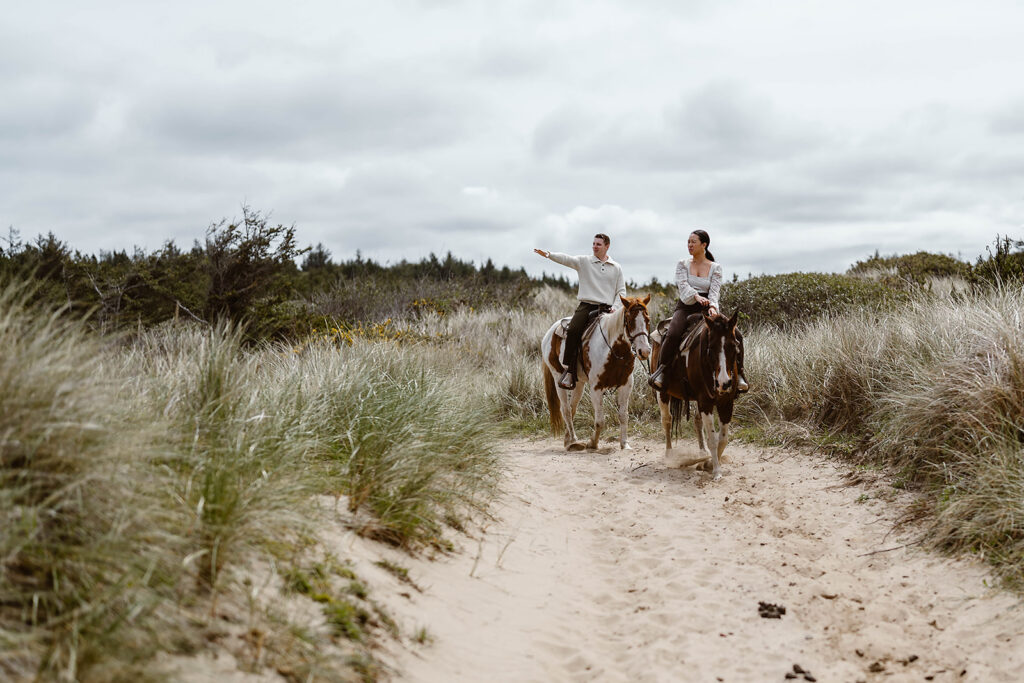
You could climb the dunes before your ceremony, ride horses on the beach, go out on a dory boat, meet your family for lunch, spend a few hours with your dog, and return to the sand for sunset. We do not need to do all of it. We only need to choose the pieces that sound like you.
Cape Kiwanda can be busy, especially in summer. The sandstone headland is fragile and actively eroding, and fenced areas need to be respected. Parking currently requires a day-use pass.
You can read my complete Cape Kiwanda elopement guide for more location ideas, activities, lodging, tides, and planning details.
Samuel H. Boardman State Scenic Corridor
Samuel H. Boardman stretches along approximately 12 miles of the southern Oregon Coast and gives you access to forest, cliffs, beaches, sea stacks, and viewpoints without spending half your elopement in the car.
Some locations are reached by short walks. Others require steeper trails, tide awareness, and much more effort. China Beach, for example, can feel more tucked away, but sections of the coastline may become inaccessible as the tide rises.
This is not a place where I choose a location based only on a photograph. We will consider current trail conditions, tides, weather, daylight, privacy, who you are bringing, and how much hiking you actually enjoy.
My updated Samuel H. Boardman elopement guide goes much deeper into the individual locations and what each one asks of you.
Cannon Beach
Cannon Beach is one of the most recognizable locations on the Oregon Coast, with a long stretch of sand and Haystack Rock sitting just offshore.
It is easy to reach and works well for couples bringing family members who may not want a difficult hike. It also has restaurants, lodging, and other coastal locations nearby, making it easier to create a full experience around the ceremony.
It is popular for all the same reasons. If privacy matters, timing, season, weather, and the exact section of beach will make a real difference.
You can find more planning details in my Cannon Beach elopement guide.
Hug Point
Hug Point gives you beach, sandstone formations, caves, forest, and a seasonal waterfall in one location. At lower tides, you can explore more of the shoreline and see traces of the old stagecoach road carved into the rock.
Tide timing is not optional here. Areas around the point can become cut off as the water rises, and Oregon State Parks may require a special-use permit for an event. The park does not issue those permits for events between the Friday before Memorial Day weekend and Labor Day, so the date and type of ceremony matter.
The official Hug Point State Recreation Site page is the place to check current conditions and special-event guidance.
Oregon Dunes National Recreation Area
If you want sand without building the day around a beach, the Oregon Dunes stretch for roughly 40 miles along the central coast. The landscape includes enormous dunes, forest, lakes, wetlands, and areas where off-highway vehicles are permitted.
Different sections have different access and activity rules, so we would choose a location based on whether you want to hike, ride an ATV, find a quieter non-motorized area, or combine the dunes with time on the coast.

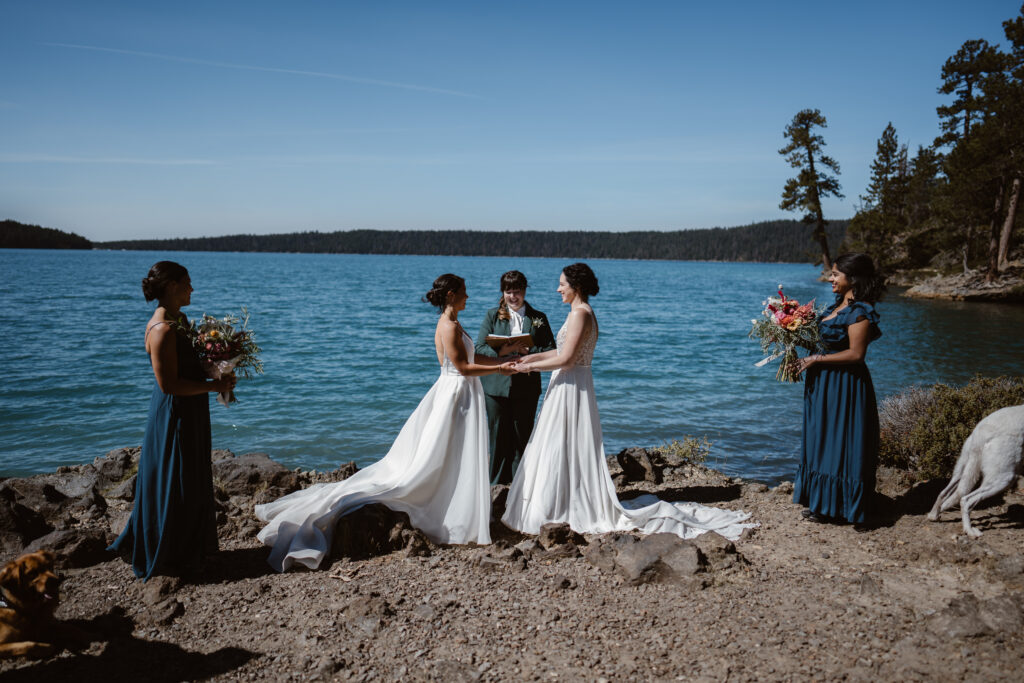
Oregon lake elopement locations
Oregon’s lakes can give you mountain reflections, volcanic landscapes, easy shoreline access, or a hike that earns the view.
The right lake depends on whether you want a place your family can reach, somewhere you can paddle, or an alpine setting that requires more effort.
Crater Lake National Park
Crater Lake is Oregon’s only national park and one of the most recognizable landscapes in the state. The lake fills the caldera left by the collapse of Mount Mazama, and its deep blue color changes with the weather and light.
A special-use permit is required for a wedding ceremony in the park, and an approved permit does not give you exclusive use of a location. Snow can affect access well into summer, and Rim Drive does not open on a fixed annual date.
The Cleetwood Cove Trail, the only trail providing legal access to the lakeshore, is closed for major rehabilitation during the 2026, 2027, and 2028 seasons. That means no hiking to the water, swimming, or standard boat tours during those closures. Rim overlooks and other open areas can still be part of an elopement, but plans must follow current park access.
Check Crater Lake National Park’s current conditions before every visit.
Sparks Lake
Sparks Lake sits along the Cascade Lakes Scenic Byway west of Bend, with views toward South Sister and Broken Top. The shallow lake, meadow, volcanic rock, and mountain backdrop can look completely different as the water level and seasons change.
Road access is seasonal, and smoke, snow, mosquitoes, and summer crowds can all affect the experience. Sunrise, a weekday, or a shoulder-season date may create more breathing room, depending on access.
Trillium Lake
Trillium Lake is one of the classic Mount Hood views, with the mountain rising beyond the water on a clear day.
In the warmer months, much of the lake can be reached by road and short paths rather than a dedicated hike. In winter, road closures and snow can turn the approach into a snowshoeing or cross-country skiing experience.
That makes Trillium Lake flexible, but it also means we need to be honest about which version of the location you want to experience.
Green Lakes
The Green Lakes area sits between South Sister and Broken Top and requires a longer hike through the Three Sisters Wilderness. This is a better fit if hiking is something you genuinely want to do, not something you feel obligated to endure for a mountain photograph.
A Central Cascades Wilderness Permit is required for day use at the Green Lakes/Soda Creek trailhead between June 15 and October 15. Overnight wilderness use also requires a permit during the season. Those permits are limited and need to become part of the planning timeline.
Oregon mountain elopement locations
A mountain elopement does not automatically mean climbing all day in wedding clothes.
Oregon has mountain experiences ranging from drive-up viewpoints and short walks to overnight backpacking trips. The best option depends on your ability, your guests, the season, how much privacy you want, and what you actually want the day to feel like.
Mount Hood
Mount Hood is one of Oregon’s most recognizable landmarks, with alpine lakes, forest trails, wildflowers, snow, ski areas, and viewpoints spread across the mountain.
You can build a Mount Hood elopement around hiking, skiing, snowshoeing, a cabin, or an easier-access location where family can join you. Wilderness permits, seasonal roads, snow, wildfire closures, and parking requirements vary across the area, so “Mount Hood” is only the beginning of the location conversation.
The Three Sisters
The Three Sisters rise west of Bend and Sisters, surrounded by wilderness, alpine lakes, volcanic terrain, and trails ranging from approachable to extremely demanding.
The Central Cascades Wilderness Permit system applies to all overnight use and certain day-use trailheads between June 15 and October 15. If this region is calling to you, we will begin with the experience and trail difficulty you want, then choose a location with an access and permit plan that makes sense.
Mount Ashland & the Siskiyou Mountains
Mount Ashland gives you a completely different Oregon mountain experience. The Siskiyou landscape mixes mountain views, forest, wildflowers, and access to Ashland’s restaurants, wineries, theaters, and places to stay.
You could spend one part of the day in the mountains and another eating an incredible dinner in town. You could explore the forest, include family for an accessible ceremony, or turn the trip into a longer southern Oregon experience.
Access changes with snow, fire season, weather, and road conditions, so the exact location and time of year matter. Mount Ashland also sits within a much larger patchwork of public lands, forests, and sensitive environments, which means we will verify the rules for the specific place rather than treating the entire mountain as one ceremony site.
Eagle Cap Wilderness
The Eagle Cap Wilderness in northeast Oregon holds alpine lakes, meadows, granite peaks, and longer backcountry routes. It is one of the best options on this list for couples who want the elopement to include backpacking or several days in a more remote environment.
A stay at Minam River Lodge can turn the trip into an experience of its own. The lodge is reached by hiking, horseback, or charter flight rather than driving to the front door.
This is the kind of place where one day may not be enough. An overnight or multi-day elopement gives you room to travel, settle in, experience the landscape, eat well, and get married without racing the clock.
Steens Mountain
Steens Mountain rises above the high desert in southeastern Oregon, with glacial gorges, broad overlooks, alpine areas, and views stretching across the Alvord Desert.
It feels remote because it is remote. The Steens Mountain Loop Road is generally most accessible from midsummer into fall, but snow, weather, wildfire restrictions, and road conditions determine what is actually possible. Some sections are better suited to high-clearance vehicles, and cell service and nearby resources are limited.
Steens is a strong fit for couples who want solitude and are comfortable planning around long drives, changing conditions, and fewer services.

Oregon river elopement locations
A river can become much more than the place where you exchange vows. It can shape the whole experience through rafting, kayaking, fishing, paddleboarding, swimming, or a slow picnic beside the water.
Smith River
Oregon’s Smith River is in the southwestern part of the state, not Central Oregon. Its forks flow through forested country toward the Umpqua River.
Farther south, across the California border, the Smith River National Recreation Area runs through redwood country and is known for exceptionally clear water. These are connected regional experiences but separate jurisdictions with different rules, so we need to be specific about which Smith River location you mean.
If you want to combine river time with redwoods, my Jedediah Smith Redwoods elopement shows what that experience can become.
Deschutes River
The Deschutes River flows through Bend and continues north before meeting the Columbia River near The Dalles. It is not part of the Columbia River Gorge near Bend.
Around Bend, the river can become part of a day that includes paddleboarding, rafting, fishing, walking along the water, eating well, and exploring the city. Farther north, the Lower Deschutes is known for whitewater and guided river trips.
My Bend elopement guide includes more location, lodging, travel, and brewery ideas.
Columbia River
The Columbia River forms much of the border between Oregon and Washington and passes through the Columbia River Gorge before reaching the Portland area.
The experience here can include waterfalls, forest trails, viewpoints, boat travel, Hood River food and wine, and time in Portland. Some locations are incredibly accessible, while others require hiking, permits, or careful seasonal planning.
Current closures and trail alerts should always be checked through the Columbia River Gorge National Scenic Area. You can read more about this location in my Columbia River Gorge Blog.
Rogue River
The Rogue River gives southern Oregon couples another way to build the wedding around an actual experience. Depending on the section and season, that might mean rafting, jet boats, fishing, hiking, or spending several days at a remote riverside lodge.
A guided trip can be part of the elopement day or something you do before or after the ceremony. The operator, river section, water conditions, and access all matter, so this is something to plan with an experienced local outfitter.

Oregon high desert elopement locations
Oregon is not all moss, rain, and coastline.
Central and eastern Oregon hold volcanic rock, painted hills, enormous canyons, dry lakebeds, sagebrush, and wide-open skies. These landscapes can be hot, cold, windy, muddy, smoky, or completely still depending on the season.
Smith Rock State Park
Smith Rock rises out of Oregon’s high desert with towering cliffs, river views, hiking trails, and some of the best rock climbing in the state.
For couples who love to climb, imagine incorporating a guided rock climbing adventure into your elopement, with me photographing you from the ground or, depending on your experience and the route, climbing alongside you to capture the action. Not a climber? The park also offers beautiful spots for a ceremony near the river and more adventurous hikes with incredible views.
Smith Rock is popular, exposed, and can get extremely hot during summer. Parking, group size, pets, climbing logistics, and any required permits or permissions should all be considered in advance.
Painted Hills
The Painted Hills are part of John Day Fossil Beds National Monument. Bands of red, gold, brown, and black shift with the light and moisture, giving the hills their painted appearance.
This is a protected fossil landscape, not an open desert where we can wander anywhere that looks interesting. Visitors need to remain on established trails and boardwalks, and a ceremony or other special use may require approval from the National Park Service.
Owyhee Canyonlands & Leslie Gulch
The Owyhee Canyonlands and Leslie Gulch feel more like parts of Utah or Arizona than the Oregon many people imagine. There are sandy washes, enormous rock formations, canyon walls, the Owyhee Reservoir, and long stretches of remote road.
Leslie Gulch is one of my favorite places in Oregon, but it demands preparation. Summer heat can be dangerous, roads may become impassable when wet, cell service is limited, and there are few nearby services.
If you want to see what a day here can actually look like, read about this dog-friendly Leslie Gulch elopement.
Alvord Desert
The Alvord Desert sits east of Steens Mountain in southeastern Oregon, not southwest Oregon.
When the playa is dry, the pale lakebed creates an enormous, open landscape beneath the mountain. When it is wet, driving onto it can become dangerous or leave deep damage behind. The Bureau of Land Management says the best conditions for vehicle travel are generally June through November, but current weather and surface conditions still need to be checked.
This is not a location to approach casually. Fuel, water, food, navigation, weather, vehicle preparation, private-property boundaries, and a backup plan all matter. That preparation is also part of what makes the experience feel so different from an easy roadside stop.

What to experience during your Oregon elopement
Your ceremony may be the emotional center of the day, but it does not have to be the only thing you do.
Choose something you are excited to wake up for. That could be:
- Kayaking or taking a guided whitewater rafting trip
- Floating or river tubing where conditions, regulations, and water levels allow
- Rock climbing with a qualified guide
- Mountain biking
- Paddleboarding
- Backpacking or hiking
- Riding ATVs in a designated section of the Oregon Dunes
- Horseback riding
- Taking a boat or dory trip
- Booking a helicopter or charter flight to an approved landing location
- Fishing with a licensed guide
- Wine tasting in the Willamette, Rogue, or Umpqua Valley
- Visiting breweries in Bend, Portland, Hood River, or Ashland
- Hiring a private chef
- Building an entire picnic around your favorite food
- Soaking in a legally accessible hot spring
- Stargazing in the high desert
- Bringing your dog for part or all of the experience
- Spending a rainy afternoon in a cabin with absolutely nowhere else to be
If your dog belongs in the day, my dog-friendly elopement guide covers locations, packing, handlers, lodging, and backup plans.
You also do not have to fit everything into one day. Oregon works beautifully for an overnight, one-and-a-half-day, or two-day experience.
You could explore with your family and share dinner on the first day, then exchange private vows the next morning. You could hike to a fire lookout, sleep beneath the stars, and wake up already inside the experience. You could begin in Portland, spend a day in the Columbia River Gorge, and finish at a cabin near Mount Hood.
More time does not mean stuffing the itinerary with more things. It means giving the things you choose enough room to matter.
Oregon elopement marriage licenses, witnesses & permits
The experience can feel completely free, but there are still legal and land-use details to handle.
Oregon marriage licenses
Marriage licenses are issued by Oregon counties and can be used for a ceremony anywhere within the state. The application process, identification requirements, appointments, fees, and waiver procedures can vary by county, so use the current instructions from the county issuing your license.
Oregon marriage licenses generally become effective after a three-day waiting period and expire 60 days after the effective date. Some counties allow couples to request a waiver of the waiting period, although the procedure and fee vary.
You and your partner are responsible for applying, providing the required documents, paying the fees, and confirming the current county requirements. I can help you identify what needs to be researched and keep the deadline from becoming a last-minute surprise.
Officiants & witnesses
Oregon requires an authorized officiant and two witnesses who are at least 18 years old.
Authorized officiants can include certain judicial officials and people authorized by a religious congregation or secular organization. If you want me to officiate, we can discuss whether that makes sense for your ceremony and photography plans. If I am not serving as the officiant, I may be able to act as one of your witnesses. We will still arrange a second adult witness and confirm every role before the wedding.
Ceremony permits
Permit requirements depend on the exact location, land manager, ceremony size, activities, equipment, and date.
National parks, state parks, National Forest land, Bureau of Land Management areas, wilderness areas, city property, and the Oregon ocean shore do not all follow the same rules. A permit may regulate group size, ceremony location, chairs, arches, flowers, food, amplified music, parking, photography, or how long you can remain in one place.
Do not assume that a small elopement never requires a permit. Cannon Beach, Crater Lake, Hug Point, Mount Hood, and Smith Rock are managed by different agencies with different requirements.
I help my couples identify the correct agency, understand how the rules affect the experience, and plan around the approved location and conditions. The couple completes and submits any required applications, pays permit fees, and keeps the approved permit available during the ceremony.
Leave No Trace
I have completed Leave No Trace education specifically for photographing elopements on public lands, and my couples and I follow the seven Leave No Trace principles throughout the experience.
That means staying on durable surfaces, packing out everything we bring with us, respecting wildlife, following fire and pet regulations, and leaving natural objects where we find them. It also means being willing to choose another location when a landscape cannot responsibly accommodate us.
Oregon gives us access to some incredible places. Part of planning an experience here is making sure those places are treated with care.

The best time to elope in Oregon
There is no single best Oregon elopement season because the coast, mountains, valleys, and high desert behave like completely different places.
Spring
Spring can mean waterfalls, green forests, wildflowers at lower elevations, rain on the coast, and lingering snow in the mountains. Higher-elevation roads and trails may remain closed well into late spring or early summer.
Summer
Summer offers the greatest access to mountain roads, alpine trails, and high-elevation locations. It also brings larger crowds, high desert heat, wildfire restrictions, smoke, and limited wilderness permits.
Fall
Early fall can be a beautiful time for mountains, forests, vineyards, and high desert travel. Temperatures may be more comfortable and summer crowds may begin to thin, but wildfire conditions can continue and snow may arrive earlier than expected at elevation.
Winter
Winter can bring storms and huge waves to the coast, snow to the mountains, and quieter conditions in some lower-elevation areas. It can also close roads, trails, lodging, and services.
Rain is not automatically a reason to change the plan. Sometimes it is the moment everyone decides, “fuck it,” stops trying to control the day, and has more fun. Rain can bring fog, deeper colors, empty beaches, and some of my favorite photographs.
We will still take weather seriously. Loving rain does not mean ignoring dangerous surf, flooding, lightning, extreme heat, wildfire, ice, or unsafe roads.
Traveling to Oregon
Portland International Airport is the largest airport in Oregon, but it is not automatically the best choice for every elopement.
Depending on where you are going, consider:
- Portland International Airport (PDX): Best for Portland, the Columbia River Gorge, Mount Hood, the north coast, and many Willamette Valley locations.
- Redmond Municipal Airport (RDM): Often the most convenient option for Bend, Smith Rock, the Three Sisters, and central Oregon.
- Eugene Airport (EUG): Useful for the central Willamette Valley, parts of the central coast, and some Cascade destinations.
- Rogue Valley International-Medford Airport (MFR): Best for Ashland, Mount Ashland, Crater Lake, the Rogue Valley, and portions of southern Oregon.
Oregon is large, and drive times can be deceptive. Portland to Samuel H. Boardman, for example, is not a casual day trip. Neither are Steens Mountain, the Alvord Desert, or the Eagle Cap Wilderness.
Choose one region or give yourselves enough days to enjoy the drive. A statewide speed run is not an elopement experience. It is a lot of time staring through a windshield.
Where to stay for your Oregon elopement
The place you stay can become part of the experience rather than somewhere you only use for sleeping.
Look for:
- An off-grid treehouse surrounded by forest
- An oceanfront home where you can watch the weather move across the water
- A Mount Hood cabin with a fireplace
- A high desert home with enough outdoor space for dinner and stargazing
- A cabin with a private hot tub
- A lodge that can host a small dinner with your family
- A dog-friendly rental with enough space for your pup and a handler
- A walkable hotel in Portland, Bend, Hood River, or Ashland
- A remote lodge reached by hiking, horseback, boat, or charter flight
Individual vacation-rental listings change constantly, so I would rather help you search for the right features, location, and experience than promise that one specific Airbnb will still exist when you are ready to book.
Pay attention to drive time, road access, check-in rules, pet restrictions, whether gatherings are allowed, and whether the getting-ready spaces have enough room and natural light. If you want to host dinner, invite family over, bring a private chef, or have vendors on the property, get written permission from the host before booking.
Ready to plan your Oregon elopement?
Oregon can hold almost any kind of experience, but that does not mean we need to cram the entire state into one wedding.
We begin with what makes you feel alive. Maybe it is rain on the coast, a difficult hike, a quiet lake, your dogs running through the desert, dinner in Ashland, beer in Bend, or two days with enough breathing room to experience all of it.
From there, I help you narrow the region, research locations, understand access and permits, build a timeline around light and weather, find room for the people and activities that matter, and create backup plans that do not feel like disappointing substitutes.
Then you get to live it.
And your photographs become the artifacts of how it all felt.
Let’s begin with the part of Oregon you cannot stop thinking about.

More About ME
I believe your wedding day should be an experience you'll still be talking about decades from now.
That's why I spend as much time designing unforgettable experiences as I do documenting them, weaving together incredible places, meaningful moments, and wild experiences to make your day unforgettable. The trailheads, rivers, backroads, and mountain passes I love become the backdrop for stories you'll never stop telling.
I'm Jayne, an experience designer and elopement photographer helping couples turn their wedding day into the adventure of a lifetime.
Meet Your Guide
+
How to Design an Elopement That Feels Like You
+
Helicopters, Boats & Horses: Adventure Beyond the Hiking Trail
+
How to Plan an Elopement You'll Talk About for Decades
explore more
JOURNAL
The
Explore Iceland
Unreal Iceland Elopement Locations
Explore Alaska
Remote Alaska Elopement Locations
Explore Oregon
