
Journal
The
CATEGORIES
Crater Lake is one of those places that makes you stop talking when you first see it. The lake is SO blue, the cliffs are enormous, and Wizard Island somehow looks tiny until you remember how far below you it actually is.
It is also not a place where I would plan one quick ceremony, take a few photographs at an overlook, and call it a day. There is too much surrounding the park that is worth experiencing. You can snowshoe beside the rim, hike toward Mt. Thielsen, camp beside the Clearwater River, spend an afternoon chasing waterfalls, soak in a hot spring, or rent a cabin at Diamond Lake and give yourselves time to explore without constantly watching the clock.
Your Crater Lake elopement could involve a sunrise hike and private vows, but it could just as easily begin with breakfast, coffee, and your favorite people meeting you at an accessible overlook later. I want the day to fit the two of you, not a predetermined idea of what an adventurous wedding is supposed to look like.

Begin with what you actually want to experience
Before choosing a ceremony location, think about the day beyond the view.
Would you wake up before sunrise or would that make both of you miserable? Do you want to hike for several hours, take a short walk through the forest, or stay somewhere accessible enough for your family to join you? Do you want to camp, rent a cabin, or return to a comfortable bed and a real shower? Does adventure mean climbing toward Mt. Thielsen, jumping into extremely cold water, or watching the weather move across the lake with nowhere else you need to be?
I want to know whether you love hiking or merely tolerate it for a good view. I want to know what you eat when you celebrate, whether your dog goes everywhere with you, which people need to be there, and what would make you finish the trip thinking, “Holy shit. We actually did that.”
Those answers are much more useful than beginning with a list of popular overlooks.
Getting married at Crater Lake National Park
Crater Lake sits inside the caldera created by the collapse of Mount Mazama. At 1,943 feet deep, it is the deepest lake in the United States. It is famous for the clarity of its water and its intense blue color, although the way it looks changes constantly with the clouds, light, smoke, snow, and wind.
The national park gives you much more than one famous view. There are old-growth forests, waterfalls, pumice fields, wildflower meadows, volcanic formations, and miles of trail beyond the rim. Your ceremony can happen above the lake without every other part of the experience happening at the same overlook.
Rim Village has paved walkways, parking, seasonal facilities, and wide views of the lake. It may be the right choice when parents, grandparents, children, or anyone with limited mobility will be joining you. It is also one of the busiest areas in the park, especially during summer. A wedding permit does not make a public overlook private, so other visitors may walk past, stop nearby, or congratulate you.
Some couples enjoy that energy. Others would rather read their private vows somewhere quieter and meet everyone at the rim afterward. We can build the day either way.
Hiking around Crater Lake
The Discovery Point Trail follows the west rim through a wind-shaped forest. It is approximately two miles round trip with about 100 feet of elevation gain, giving you time to move through the landscape without turning the entire day into a strenuous hike.
Watchman Peak is shorter and steeper. The 1.6-mile round-trip trail gains approximately 420 feet and ends at a fire lookout with views across the lake toward Wizard Island. Sunset is VERY popular here, so we need to decide whether that light is worth sharing the trail with everyone else who received the same recommendation.
Mount Scott is a completely different experience. The trail is approximately 4.4 miles round trip with about 1,250 feet of elevation gain and reaches the park’s highest point at 8,929 feet. It is the only place inside the park where you can see the entire lake at once. If climbing to that view together sounds exciting, we will give it the time, footwear, water, and preparation it deserves.
Shorter options include Sun Notch, which looks toward Phantom Ship, and Plaikni Falls, which moves through the forest to a waterfall fed by snowmelt. The Pinnacles bring you into a canyon filled with volcanic spires and feel completely different from the open caldera.
We do not need to fit all of these into one day. I would rather spend real time in two places than rush between eight overlooks because they appeared on a checklist.

Can you swim in Crater Lake?
Under normal conditions, Cleetwood Cove Trail is the only permitted public route to the shore of Crater Lake. The hike descends approximately 700 feet in 1.1 miles over loose pumice, which means the return trip is a steep climb at elevation.
When the trail is open, swimming and wading are permitted from the Cleetwood Cove shoreline. The water is SO cold. This is suck-the-air-out-of-your-lungs cold. It will shock your entire system, but jumping into the deepest lake in the United States, surrounded by some of the clearest and bluest water you will ever see, would be an incredible thing to experience together if cold water and adrenaline sound like your idea of fun.
This is not currently available, though. Cleetwood Cove Trail, the lakeshore, and the marina are closed for the 2026, 2027, and 2028 seasons while the National Park Service completes a major rehabilitation project. Because Cleetwood Cove is the only permitted public access to the shore, visitors cannot currently swim in Crater Lake.
After the trail eventually reopens, we will check the current rules and conditions before adding a swim to the plan. Crater Lake prohibits wetsuits, snorkels, masks, goggles, fins, life jackets, waders, inner tubes, paddleboards, kayaks, canoes, inflatable rafts, and other flotation devices or private watercraft. You can swim in standard swimwear when access is open, but this is not the place to bring floaties for a wedding-day lake party.
Can you take a boat to Wizard Island?
Boat tours normally depart from Cleetwood Cove, and some seasonal tour options have included time on Wizard Island. Reaching the island requires hiking down Cleetwood Cove Trail, taking a shared public boat, and completing the steep hike back to the rim afterward.
Public boat tours are not operating during the Cleetwood Cove closure in 2026, 2027, or 2028, so Wizard Island is not currently accessible to visitors.
When boat service eventually returns, a Wizard Island ceremony would require direct confirmation from Crater Lake National Park. A standard wedding permit should not be assumed to cover a ceremony on the island, and the tour would still be shared with other passengers unless the park and its authorized concessioner offered another approved arrangement.
It would also be a full physical day. You would need to account for the Cleetwood Cove descent and climb, boat schedule, time on the island, changing weather, and everything you carry with you.
I LOVE the idea of getting married on Wizard Island, but it is a future possibility rather than something couples can currently book.
Crater Lake in winter
Crater Lake is an incredible place to snowshoe. Winter turns the park into a completely different experience, with deep snow, shorter days, fewer services, and much less vehicle access than summer.
The North Entrance Road and Rim Drive close to regular vehicles for winter, while the road from the south entrance toward park headquarters and Rim Village is generally maintained as conditions allow. Once enough snow accumulates, parts of the closed rim road become routes for snowshoeing and cross-country skiing.
A winter elopement could include snowshoeing to a lake view, reading your vows in the snow, drinking something hot beside the rim, and returning to a cabin for dinner. It could also include wind, fog, heavy snowfall, or a lake that stays hidden for hours.
Snow cornices can extend beyond the caldera’s edge and appear solid from above, so marked boundaries are not suggestions. We will respect closures, stay back from the rim, monitor the forecast, and make sure everyone has the equipment and clothing needed for actual winter conditions.
If seeing the full lake clearly is the only outcome that would make the day feel successful, winter may not be the right choice. If snowshoeing together and experiencing the park in whatever weather arrives sounds exciting, it could be SO good.
Mt. Thielsen & Diamond Lake
Crater Lake does not have to carry the entire trip. Mt. Thielsen and Diamond Lake sit north of the park and can easily become their own day.
The Mount Thielsen Wilderness has miles of hiking and backpacking routes, including approximately 26 miles of the Pacific Crest Trail. The standard approach toward Mt. Thielsen climbs through the forest to the PCT and onto the mountain’s shoulder. The actual summit is not a casual hiking destination. Reaching it involves an exposed, unmaintained scramble, so I would not recommend treating the summit as an elopement location unless you already have the necessary experience and understand the risk.
You do not need to stand on the very top to make Mt. Thielsen part of the day. Hike to a viewpoint, spend time on the PCT, or plan a longer backpacking route through the wilderness. The surrounding area has lakes, forest, mountain views, and access to a much larger trail system for couples who want something more involved than a short national park hike.
For lodging, I would look at a cabin at Diamond Lake Resort. The resort has cabins ranging from smaller vintage options to a large retreat cabin that can accommodate a group. Staying there gives you better access to Diamond Lake and Mt. Thielsen and can feel more connected to the landscape than driving back to a distant rental every night.
Diamond Lake is north of Crater Lake, so seasonal park entrances matter. When the North Entrance Road is closed, reaching the park from Diamond Lake requires a much longer route. This is a summer or early-fall base unless everyone understands that winter access will be very different.

Waterfalls along the North Umpqua
The North Umpqua corridor west of Diamond Lake is one of my favorite ways to extend a Crater Lake trip. It includes the North Umpqua River, the Clearwater River, waterfalls, hot springs, trails, and camping. This is where I would send couples who want to spend one day looking at the giant blue lake and the next getting wet beneath a waterfall.
Toketee Falls is reached by a short trail through the forest to an established viewpoint. The basalt columns and two-tiered waterfall are beautiful, but the viewing platform is where the official trail ends. Do not climb over the barrier or attempt the unofficial descent to the bottom. The route is steep, damaged, and unsafe.
Watson Falls is a better choice when you want to get closer to the water. The short forest trail leads toward the base of the waterfall, and the spray will probably get us wet. GOOD. Wear shoes with traction, bring a layer you do not mind soaking, and let that be part of the experience.
Spring and summer are usually the best seasons for waterfall plans because of water flow and trail access. Conditions still change with snow, storms, fire activity, and seasonal closures, so we will check the Umpqua National Forest alerts before the trip.
Clearwater Falls is another favorite. The Clearwater River is shallow, clear, and incredibly beautiful as it moves through old-growth forest toward the falls. It has a softer, greener feeling than the open views at Crater Lake and gives us an entirely different landscape to photograph and experience.
Clearwater Falls Campground would be my camping recommendation in this area. You are surrounded by forest and close to the river and waterfall. Toketee Lake Campground is another available base near Toketee Falls, Watson Falls, and Umpqua Hot Springs, but it would not be my first choice if Clearwater Falls is available.
Umpqua Hot Springs
Umpqua Hot Springs can be a fun addition for couples who genuinely want the experience and do not mind a little extra effort.
The springs are reached by a short but steep hike above the North Umpqua River. Road access commonly closes during winter, and temporary closures can happen because of snow, fire, maintenance, overcrowding, or resource damage. The pools are public, clothing may be optional, and there is no guarantee of privacy.
This is not somewhere I would casually add to a wedding timeline because it looks romantic online. It works best when the two of you are comfortable with the actual experience and we have checked the current Forest Service alerts immediately before the trip.
If a hot-spring hike is one of the things you cannot stop thinking about, tell me. We can find out what is legally accessible and decide whether it belongs on the wedding day or would feel better the following morning.
Natural Bridge & the Upper Rogue River
If you are approaching Crater Lake from Medford, stop at Natural Bridge.
The trail is relatively easy and follows a section of the Upper Rogue River where the water moves into an ancient lava tube and disappears beneath the rock before emerging downstream. It is such a stunning place to walk, especially when you want to break up the drive without committing to another major hike.
Natural Bridge and nearby Union Creek are part of the Upper Rogue River corridor, not the North Umpqua. That distinction matters because these areas are managed separately and may have different alerts, fire restrictions, and access conditions.
The nearby Rogue Gorge is another easy stop where you can watch the river push through a narrow volcanic channel. You could include one of these walks on the way to Crater Lake, stop for food, and continue into the park without exhausting everyone before the main part of the day begins.
Cliff Lake & the Seven Lakes Trail
Crater Lake is not the only beautiful blue water in Southern Oregon.
Cliff Lake sits within the Sky Lakes Wilderness and can be reached from the Seven Lakes Trail system. The lake is beautiful, swimmable, and surrounded by forest and mountain terrain, but this is a wilderness hiking or backpacking experience rather than an accessible Crater Lake substitute.
The full Seven Lakes area gives backpackers several options for building a longer route. Group-size restrictions, wilderness regulations, seasonal snow, mosquitoes, camping impact, and fire rules all need to be considered. Cliff Lake also receives significant use, so we would choose campsites carefully and be prepared to continue elsewhere if the area is crowded.
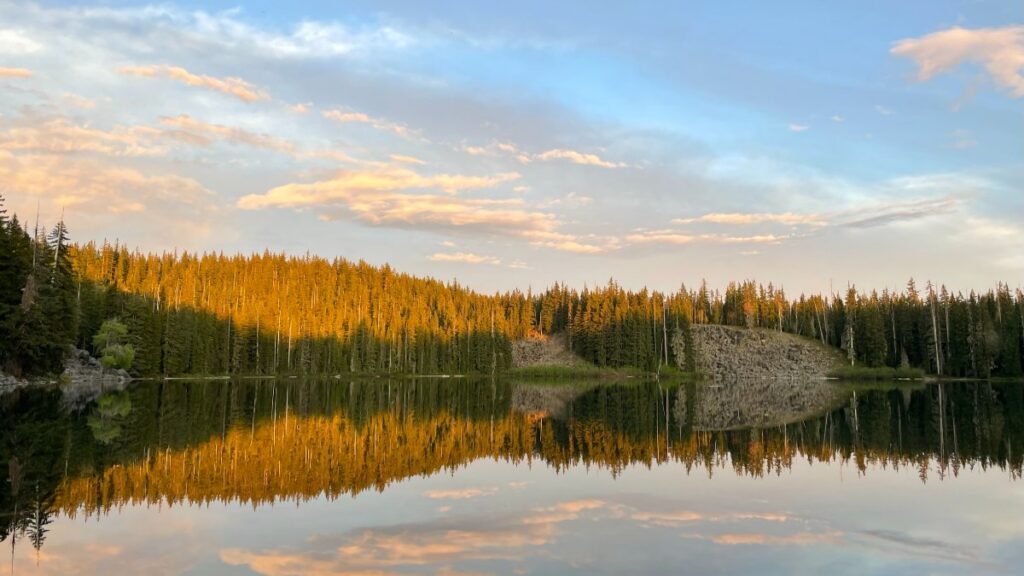
This could be an incredible alternative for couples who care more about hiking, backpacking, swimming, and camping than having the recognizable Crater Lake view. You can still visit the national park during the trip without asking it to be the setting for every part of the wedding.
Stop for pie at Beckie’s
Beckie’s Café at Union Creek Resort is the classic pie stop on the way to or from Crater Lake. The café has been serving travelers since 1926 and is known for its homemade pies, including seasonal fruit and cream options.
People recommend Beckie’s constantly online, and it is absolutely part of the Crater Lake road-trip tradition. I will also say that I LOVE the pies in Medford, so Beckie’s does not need to become a mandatory stop simply because a travel guide says it should.
Stop if homemade pie after a day outside sounds genuinely good. Get a slice there or take one back to the cabin. If you already have a bakery you love in Medford, bring that pie instead. I care much more about whether you are excited to eat it than whether it came from the internet’s official Crater Lake pie place.
Where to stay near Crater Lake
Where you stay depends on which part of the experience matters most.
Crater Lake Lodge operates seasonally near the rim, while Mazama Village offers seasonal cabins and camping. Staying inside the park can make an early morning or late evening easier, but availability fills quickly and operating dates change.
A cabin at Diamond Lake makes more sense when Mt. Thielsen, the North Umpqua corridor, or additional hiking is part of the trip. Clearwater Falls Campground would be my camping choice for a waterfall-focused experience, while a camper van can give you more flexibility to move between the park, Diamond Lake, and the surrounding forest.
A rental can give you more privacy, a kitchen, comfortable getting-ready space, and enough room to have dinner with family. Airbnbs around Crater Lake can be expensive, though, and “near Crater Lake” can still mean a substantial drive. That drive becomes much heavier when an entrance road is closed and you have to approach the park from another direction.
Check the actual route for the season, not only the distance shown in the listing. Ask whether the rental permits visitors, professional photography, and small gatherings before booking it.
If I were planning this trip for myself, I would strongly consider renting a camper van or capable vehicle, camping for part of the experience, and booking a cabin for the night when I knew I would want a shower and a real bed. A four-wheel-drive vehicle may be helpful for certain forest roads or changing conditions, but it does not replace winter tires, traction devices, or good judgment. Most primary park routes are paved, and no vehicle makes a closed road open.
Choose the season honestly
Crater Lake National Park is open throughout the year, but the same park is not available throughout the year.
July through September usually offer the greatest access to Rim Drive and snow-free hiking trails. Summer also brings the most visitors, busy parking areas, warmer afternoons, and the possibility of wildfire smoke.
June is less predictable than many people expect. It may feel like summer in Medford while snow still covers trails and roads around the rim. October can bring cold air and fewer visitors, but one storm can change access quickly. The North Entrance Road and Rim Drive close for winter when snow arrives or by November 1.
Winter and spring are for snowshoeing, skiing, and couples who are comfortable allowing the conditions to shape the day. Summer and early fall offer more trail and road access, but they also require us to think about crowds, smoke, heat, and construction.
Rain and fog do not automatically ruin the experience. Rain tends to bring out that “fuck it, we’re getting married” energy I love. Everyone stops trying to keep the day pristine and starts having fun. Fog can hide the lake completely, then reveal parts of it as the weather moves through the caldera.
We will make a thoughtful plan, but we will not spend the wedding day fighting the landscape.
What to know about permits
Wedding ceremonies inside Crater Lake National Park require a Special Use Permit. Applications request first and second choices for the date and location and are reviewed on a first-come, first-served basis.
The National Park Service recommends applying at least eight weeks in advance. If you care deeply about a specific date or location, apply earlier. At the time of writing, the park lists a nonrefundable $50 application fee and an additional $50 administrative fee after approval, plus any monitoring costs that may apply. Fees and requirements can change, so always check the current permit information before submitting anything.
Wedding ceremonies are not permitted inside Crater Lake Lodge or on its attached exterior verandas. Amplified music is not allowed, and rice, flowers, seeds, balloons, butterflies, and similar materials cannot be thrown or released. Most ceremony locations do not provide water or electricity, and everything brought into the park needs to leave with you.
I can help you research locations, understand what needs to be confirmed, and build the timeline around the approved plan. You will submit the application, pay the fees, and receive the permit directly from the park.
Bringing family or your dog
Your family can be deeply involved without joining every hike or private part of the experience. Invite them to an accessible ceremony at the rim, share food afterward, and then head somewhere quieter together. You could also read private vows first and meet everyone later for the public ceremony.
This works especially well when people have different abilities, ages, or comfort levels. Your parents do not need to climb Mount Scott for the two of you to have an adventurous day.
Dogs require more careful planning. Leashed dogs are currently permitted in campgrounds, picnic areas, parking areas, on paved walkways, along established roads, and within 50 feet of paved surfaces. They are also allowed on a limited number of designated trails, but not on most park trails or in the lake.
Review the park’s current pet regulations before choosing locations. If your dog needs to be part of the wedding, tell me immediately so we can design the experience around places where they can legally and safely join you.

Give yourselves more than one day
A full wedding day gives you time for private vows, a ceremony with family, an actual meal, and an evening adventure without moving through everything at a ridiculous pace.
Two or three days open up the rest of the region. One day could hold Crater Lake and the ceremony. The next could be Mt. Thielsen and Diamond Lake, or Toketee Falls, Watson Falls, Clearwater Falls, and Umpqua Hot Springs. A third day could include Natural Bridge, the Upper Rogue River, or a backpacking route toward Cliff Lake.
More time does not mean filling every hour. It means we can wait for the weather, stop for pie, dry our clothes, or change direction when one trail or road is not available.
Plan for the place you are actually visiting
Crater Lake comes with real logistics. We need to consider the wedding permit, seasonal road access, construction, trail conditions, elevation, parking, driving time, limited cell service, smoke, snow, clothing, food, and the needs of everyone involved.
Cell service throughout the park is limited, so download directions and save Crater Lake for offline use in the National Park Service app. Every guest should receive the meeting point, arrival time, driving route, and backup instructions before leaving their lodging.
I ask a lot of questions before recommending locations because I want to know which parts of the experience matter most. If seeing Crater Lake is essential, we protect time for it. If privacy matters more than the recognizable view, we find somewhere quieter. If your family needs easy access, we choose a ceremony location that works for them and plan your more adventurous experience separately.
From there, I can help research the locations, permits, lodging, activities, timing, light, weather, and backup plans. You will make the final bookings and submit required applications, but you will understand how the pieces fit together before the wedding day arrives.
If you keep picturing yourselves at Crater Lake, tell me what else you want to experience while you are here. Maybe it is snowshoeing beside the rim, getting soaked at Watson Falls, camping along the Clearwater River, or eventually taking that ice-cold jump from Cleetwood Cove when it reopens. We can start there and build the rest together.
Crater Lake Elopement Guide: How to Get Married at Oregon’s Most Iconic Lake
Meet Your Guide
I'm Jayne, an experience designer and elopement photographer helping couples turn their wedding day into the adventure of a lifetime.
That's why I spend as much time designing unforgettable experiences as I do documenting them, weaving together incredible places, meaningful moments, and wild experiences to make your day unforgettable. The trailheads, rivers, backroads, and mountain passes I love become the backdrop for stories you'll never stop telling.


READ THE
REVIEWS
CLIENTS' STORIES IN THEIR OWN WORDS

BOOK A
CONSULT
Bring your WILDEST ideas & QUESTIONS


The
JOURNAL
explore more
How to Plan an Elopement You'll Talk About for Decades
+
Helicopters, Boats & Horses: Adventure Beyond the Hiking Trail
+
How to Design an Elopement That Feels Like You
+


Follow Along
Keep In Touch
Start The Conversation
Instagram
An archive of wild elopement experiences and behind the scenes moments.
Newsletter
Occasional notes, honest thoughts, inspiration and where in the world I'm headed next.
Inquire
A place to begin if something here feels right. Conversations are free and casual.